A Conference That Felt Different
This was the best conference I have attended this year. Decentralization enthusiasts, blockchain people from all over the world, first-class institutions, top traders, and a huge range of activities came together. The energy was completely different from any other event I have covered. I was already looking forward to next year's Bitcoin conference while this one was still running.
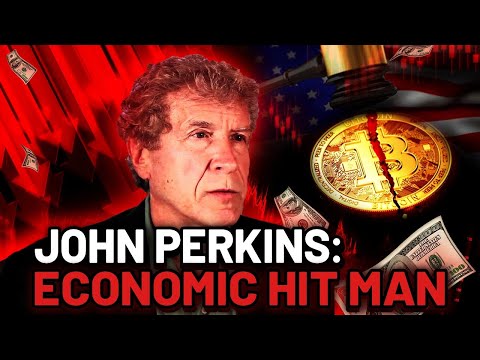
Instead of doing my usual solo recap after the talks, I got to do something better: I sat with John Perkins and recorded the debrief together. His speech had just ended, and the audience was deeply engaged. Three things from that speech stayed with me: politics, concentrated power, and the need to build rather than speculate.
Bitcoin Is Becoming a Political Issue, and That Is Dangerous
Perkins opened by drawing a parallel with climate change. Climate change was politicized for years, and now Bitcoin is going through the same process. He explained that many liberals and Democrats now see Bitcoin as a Republican issue. There is some truth to that because Biden stood in the way of Bitcoin and crypto while Trump supported it. But the real fear is that Trump and his family, especially his sons, are making a lot of money from it.
At the conference, we heard J.D. Vance speak and we heard the two Trump sons speak. Perkins pointed out that he did not see any Democratic senators or politicians on stage. He argued that the conference should invite one of the 16 Democratic senators who voted in favor of the Genius Act. He also said environmental conferences, which are mostly Democratic spaces, should invite more Republicans. The country is too divided, and if the United States wants to lead in Bitcoin, crypto, or AI, it needs to show that people are working together.
I asked him whether a future change in the majority party could break everything being built right now. He did not dismiss the risk. J.D. Vance had said he hopes Republicans stay in power for a long time, but Perkins stressed that politics is unpredictable. The goal has to be writing rules that will stick and that Democrats will not overrule. He called for compromise, which is what the Constitution was supposed to set up.
Powerful Buyers Are Already Here
We also talked about a harder problem. The Trump family is acquiring a lot of Bitcoin and ETH and other altcoins. Michael Saylor is accumulating. The US government has stated an aim to take 5 percent of the Bitcoin supply. That may sound small, but 5 percent is a lot. A government, a family, or a few individuals can have a massive impact on the price if they sell. Bitcoin is still proof of work and decentralized at the protocol level, but concentrated holdings can still affect the lives of many people.
I asked Perkins the obvious question: what can we do about that? What can we do against oligarchies in general? His answer was not comforting. Human history is a story of people and governments accumulating power, often financial power and sometimes military power. There is something in the brain that makes certain people hoard. We all know someone who hoards objects in their house. The same thing happens with money, and the hoarders of money become very powerful.
What We Can Actually Do
Perkins offered two concrete paths. The first is legal. He called Citizens United a terrible law. It gives big donors and corporations the power to finance political campaigns. He said that in any other highly developed country, this would be recognized as corruption, but in the United States it has been written into law. Changing laws like Citizens United would be one way to reduce the influence of concentrated money.
The second path is participation. If everyone gets involved in these processes, whether it is climate change or owning Bitcoin, that helps democratize things. Ultimately it comes down to us, the people, to implement laws and insist that our representatives prevent the country from sliding into a monarchy or dictatorship. He warned that this can happen. Perkins, who has spent time in many countries, said he has sometimes been behind coups, including what are known as auto coups. He had just returned from Guatemala, which experienced an auto coup when a democratically elected president refused to give up office. The lesson is that we need systems in place to prevent that here, regardless of who is president.
Perkins Refuses to Play the Price Prediction Game
Before wrapping up, I asked the question everyone at the conference was asking: when will Bitcoin reach 1 million? Some people say two years, some say five. I had asked the same question in New Zealand a few days earlier. Perkins answered honestly: he has no idea. He called himself a neophyte in all of this and said he does not like to speculate. He would rather talk about things he understands and knows.
He admitted that Bitcoin is a very complex subject and a very complex technology. He is still figuring out whether it is a currency or a commodity, and he does not even know what to call it. What he does know is that Bitcoin is a tool and it is here. The real work is figuring out how to use it to create a world our children and grandchildren want to live in. He closed with a simple line: let's build, not speculate.
I agreed with him. We spend too much time on price predictions and not enough on education, especially for kids. Perkins said that these days everyone speculates about everything, from radio shows to op-ed pages, and it accomplishes nothing. The more useful conversation is about building and learning.
Mallers, Saylor, and the Grand Finale
The final talks came back to back. First, Jack Mallers from Strike tried to sell his project, and I have to say he is an excellent seller. The product is genuinely interesting, and I want to go deeper into the Bitcoin lending narrative in the future. DeFi for Bitcoin is a great topic.
Then Michael Saylor presented his '21 Ways to Wealth' speech, directed at the 8 billion people on the planet. He laid out strategies, steps, and ways for every individual, family, small business, and entrepreneur. The question is how many of us will actually take action. Those who do will likely do great in the future.
The final speaker was Ross Ulbricht for the grand finale, and this is the one I want to spend more time on. His speech was about freedom, decentralization, and unity. He said that Bitcoin was open to everyone, and that is what he loves about it. When the idea of Bitcoin clicked for him, he got excited because he thought he could finally do something that makes a difference. Just a few months ago he was trapped behind prison walls, and now he is free. He told the crowd, 'You made this moment possible. You did this.'
Why Ross Ulbricht's Speech Hit Me Personally
I felt that speech was written for me. I know I can be insistent about decentralization. People tell me to stop talking about decentralization because they have business to build. But Ross said what I have been trying to say: decentralization is what we really need. His speech was the most emotionally tense and impactful moment of the Bitcoin 2025 conference. I recorded everything and I will probably watch it again two or three times.
The years in prison did not make Ross dull. They made him clear about what is important and what is not. He talked not only about Bitcoin but also about a mindset, about liberalism, about why we need decentralization and why we refuse to be defined. He reminded everyone of the original intention in the white paper. Many people may have forgotten, but Ross still remembers because he lived it. His analogies were strong, and I hope his speech gives you some thoughts too.
Let the Conference Decant
This year's Bitcoin 2025 conference ends here. We still had a party in the evening, and after three busy days with very little sleep, I was ready to relax. But I am happy I came. The atmosphere, the old friends, and new ones like John Perkins made it special. He is such a nice guy, and it was a happy thing to talk with people who are on the same frequency.
There is still so much to say about everything that happened. I will sort through the content from the past few days, let it decant like good wine, and share the most important material with you in the coming days or weeks. For now, I hope this series gave you something to think about. Let's reflect on what we heard, and let's keep building.